
 Image 1 of 1
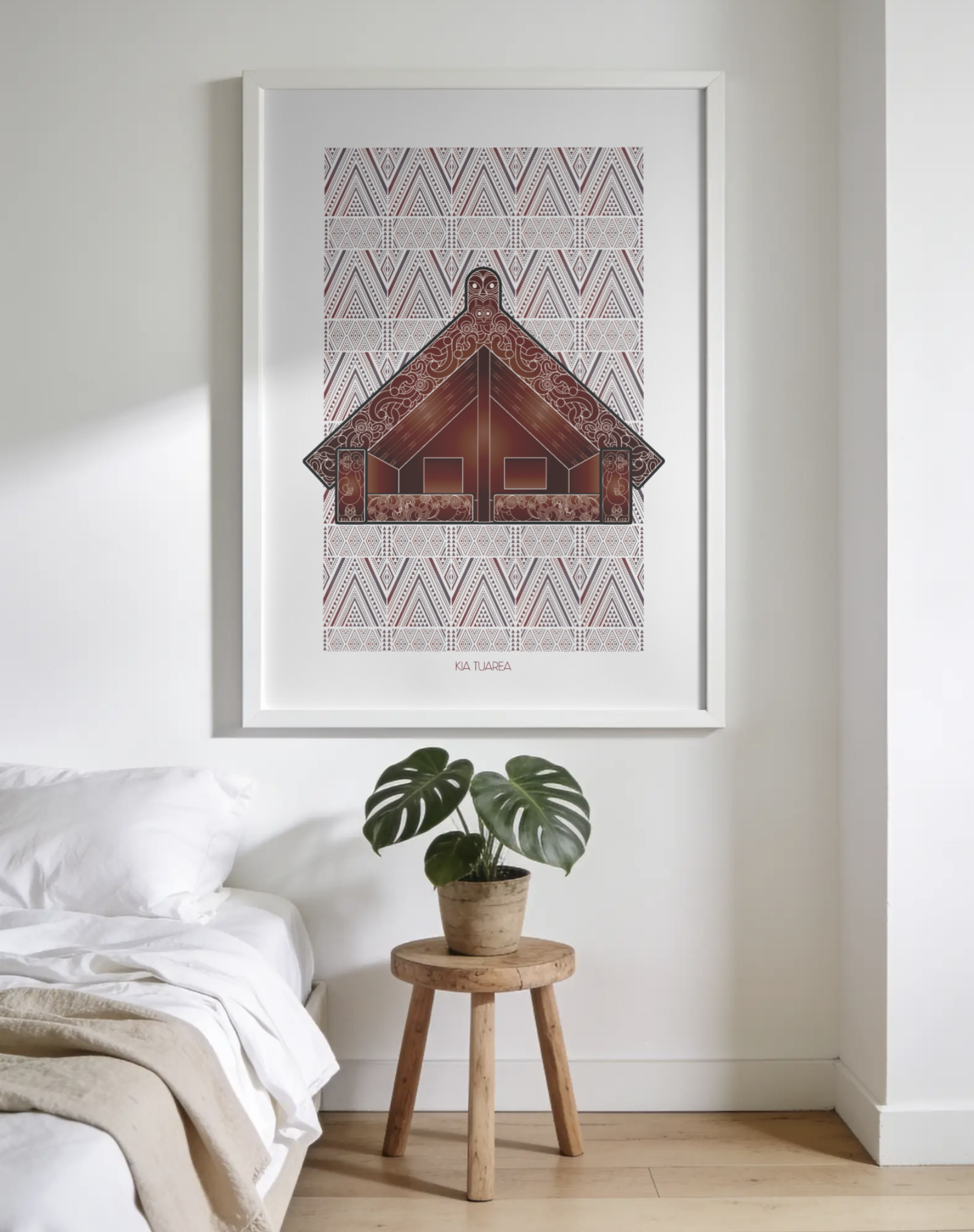
“Kia tuarea” speaks to the power of critical mass. It is the point where many parts, people, and places gather with enough strength to shift something larger than themselves. I connect this idea to the use of regional designs within the whare, where each pattern carries the presence of its own whenua, hapū, and hapori. The background niho taniwha reflects both maunga and community, standing as a reminder that strength is not held by one peak alone, but by the ranges, rivers, and people that surround it. In the same way, the collective becomes powerful when each region contributes its own identity, voice, and whakapapa. Tuarea, then, is about reaching that threshold where separate contributions become a shared force, creating the momentum needed to move the kaupapa forward.
“Kia tuarea” speaks to the power of critical mass. It is the point where many parts, people, and places gather with enough strength to shift something larger than themselves. I connect this idea to the use of regional designs within the whare, where each pattern carries the presence of its own whenua, hapū, and hapori. The background niho taniwha reflects both maunga and community, standing as a reminder that strength is not held by one peak alone, but by the ranges, rivers, and people that surround it. In the same way, the collective becomes powerful when each region contributes its own identity, voice, and whakapapa. Tuarea, then, is about reaching that threshold where separate contributions become a shared force, creating the momentum needed to move the kaupapa forward.